
What Makes a Color Prediction Game Truly Fair?
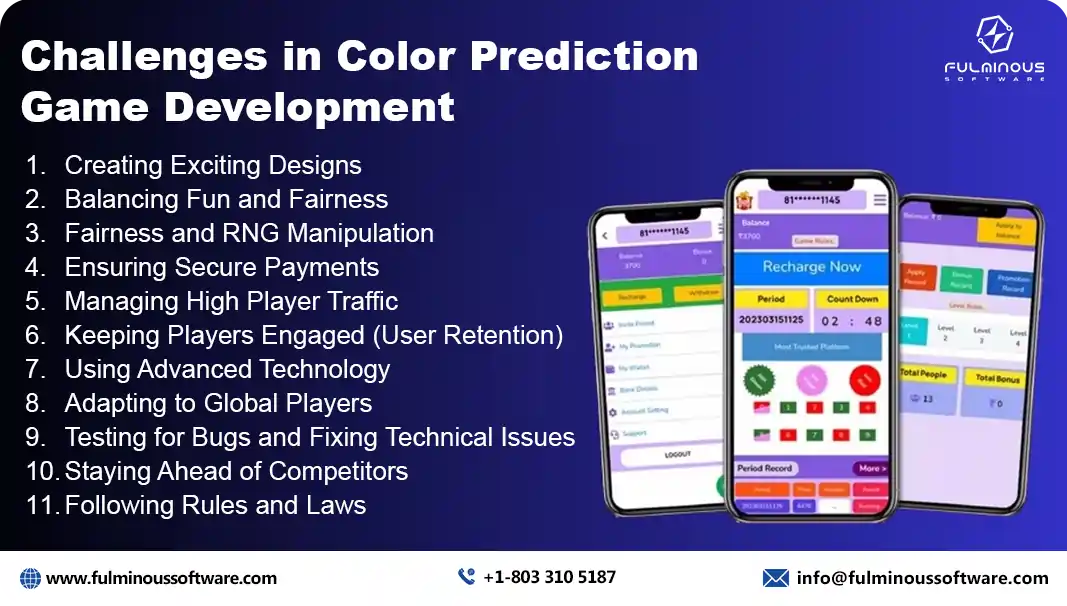
Color prediction games have become a digital sensation, captivating players with their simplicity, speed, and the tantalizing promise of real-time rewards. But as their popularity grows, so do questions about fairness. Are these games genuinely random, or are they subtly rigged to favor the house? What mechanisms ensure that every player has an equal shot at winning? To answer these questions, we must explore the core principles that define fairness in color prediction games—from algorithmic transparency to odds calculation and regulatory oversight.
The Role of Random Number Generators
At the heart of any fair color prediction game lies a Random Number Generator (RNG). This algorithm is responsible for determining the outcome of each round, ensuring that results are unpredictable and independent of previous outcomes. Most platforms use Pseudo-Random Number Generators (PRNGs), which simulate randomness through complex mathematical formulas and seed values. While deterministic in nature, PRNGs are designed to be computationally unpredictable, making it nearly impossible for players to reverse-engineer outcomes without access to the seed and algorithm.
Some platforms go a step further by implementing True Random Number Generators (TRNGs), which derive randomness from physical phenomena such as electronic noise. TRNGs offer a higher level of unpredictability and are often used in high-stakes environments where absolute fairness is critical.
Transparency Through Audits and Certification
A fair game doesn’t just rely on a well-designed RNG—it also needs to prove that the system is functioning as intended. This is where third-party audits and certifications come into play. Independent organizations conduct rigorous testing of a platform’s RNG to ensure that it produces statistically random outcomes. These audits often involve running thousands of simulations to detect any patterns or biases that could indicate manipulation.
Once a platform passes these tests, it receives certification, which serves as a public assurance of fairness. Reputable platforms display these certifications prominently, signaling their commitment to ethical gameplay and user trust.
Understanding and Communicating the Odds
Another cornerstone of fairness is the clear communication of odds. Players should know the probability of each outcome and how payouts are calculated. For example, if red and green each have a 45% chance of appearing and violet has a 10% chance, the payout structure should reflect this distribution. If the platform offers 2x for red or green and 4.5x for violet, the house edge becomes transparent and calculable.
Fair platforms avoid misleading odds or hidden fees. They provide detailed explanations of how outcomes are generated and how winnings are determined. This level of transparency empowers players to make informed decisions and fosters a sense of trust.
Independence of Outcomes
A truly fair color prediction game ensures that each round is independent of the last. This means that the outcome of one round does not influence the next, and there are no hidden algorithms that adjust probabilities based on player behavior. Independence is crucial for maintaining the integrity of the game and preventing exploitation.
Some platforms may attempt to manipulate outcomes by introducing adaptive algorithms that respond to betting patterns. While this may increase engagement, it undermines fairness by creating a system that subtly favors the house. Players should be wary of platforms that do not explicitly guarantee outcome independence.
Player Tools and Community Feedback
Fairness also involves giving players the tools to verify and understand their gameplay. This includes access to betting history, outcome logs, and statistical breakdowns. Some platforms even offer provably fair systems, where players can verify the randomness of each round using cryptographic hashes.
Community feedback plays a vital role in maintaining fairness. Platforms that encourage user reviews, respond to complaints, and engage with their player base are more likely to uphold ethical standards. A vibrant, transparent community acts as a watchdog, holding platforms accountable and highlighting potential issues.
Regulatory Oversight and Legal Compliance
In many jurisdictions, color prediction games fall under the umbrella of online gambling and are subject to regulatory oversight. Fair platforms comply with local laws, obtain necessary licenses, and adhere to industry standards. Regulatory bodies often require platforms to implement responsible gaming features, such as deposit limits, self-exclusion options, and age verification.
Compliance with these regulations not only ensures fairness but also protects players from exploitation. It creates a structured environment where disputes can be resolved, and unethical behavior can be penalized.
Testing for Fairness: What Players Can Do
While verifying fairness from the outside can be challenging, players can take steps to assess a platform’s integrity. One method is frequency distribution analysis—tracking how often each color appears over a large number of rounds. In a fair system, each color should appear roughly in proportion to its stated odds. Significant deviations may indicate bias or manipulation.
Another approach is the chi-squared test, a statistical method used to determine whether observed outcomes differ significantly from expected probabilities. While more technical, this test can provide valuable insights into the randomness of a game’s results.
Conclusion: Fairness Is More Than Just Randomness
A truly fair color prediction game is built on a foundation of transparency, randomness, and accountability. It uses robust RNGs, undergoes independent audits, communicates odds clearly, and treats each round as an isolated event. It empowers players with tools and information, listens to community feedback, and complies with legal standards.
As the popularity of these games continues to grow, fairness will remain a defining factor in their long-term success. Players are becoming more discerning, and platforms like bigMumbai login that prioritize integrity will stand out in an increasingly crowded market. In the end, fairness isn’t just a feature—it’s the very essence of trust in the digital gaming world.

About author


Leave a reply