
White Gold vs Platinum: Which Metal Is Better for an Engagement Ring?
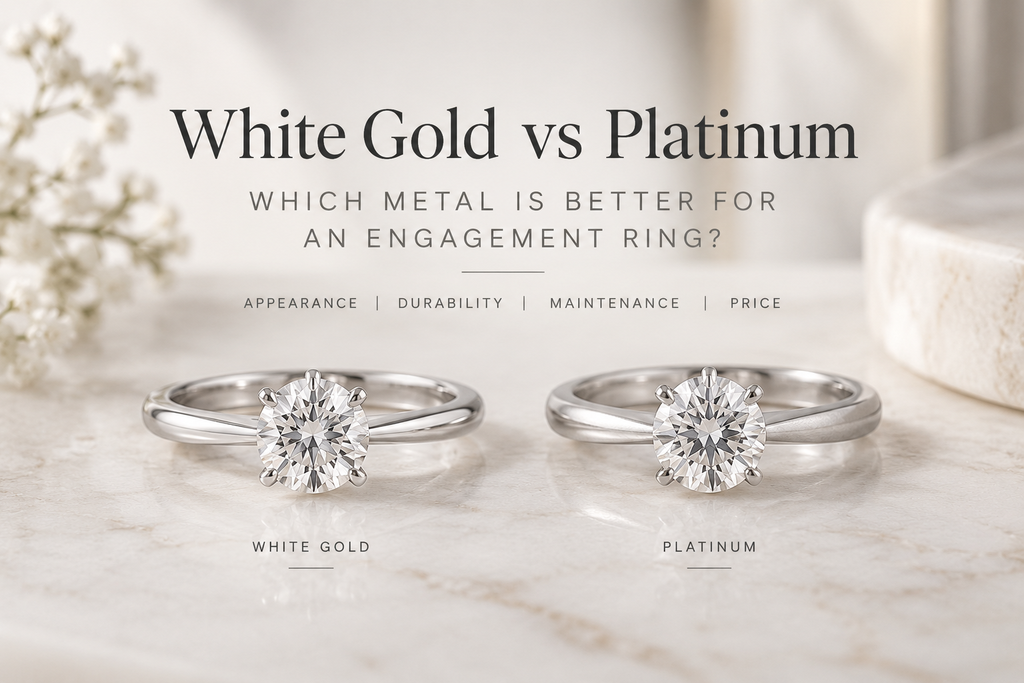
Image source: Nura Lab
Article:
White Gold vs Platinum: Which Metal Is Better for an Engagement Ring?
Choosing the centre stone is only part of designing an engagement ring. The precious metal surrounding that stone also affects the appearance, durability, maintenance and feel of the finished piece.
For buyers who prefer a bright white metal, the two most common options are white gold and platinum.
Both can create beautiful engagement rings, but they are not the same material and they behave differently over time.
What Is White Gold?
White gold is an alloy made by combining gold with other metals to create a lighter, whiter appearance.
Because pure gold is naturally yellow, white gold is not naturally bright white in the same way platinum is.
Many white-gold engagement rings are finished with rhodium plating, which gives the surface a bright, reflective white appearance.
White gold can be made in different purities, including 14K and 18K.
What Is Platinum?
Platinum is a naturally white precious metal.
It is dense, durable and widely used in fine jewellery, particularly engagement rings and wedding bands.
Unlike white gold, platinum does not require rhodium plating to appear white.
Its naturally grey-white colour changes gradually with wear rather than revealing a different-coloured metal underneath.
Which One Looks Whiter?
Freshly rhodium-plated white gold can have a very bright, mirror-like white appearance.
Platinum has a naturally softer white-grey tone.
Neither appearance is inherently better.
Some buyers prefer the bright finish of white gold, while others like the more natural and understated colour of platinum.
Maintenance Is One of the Biggest Differences
Maintenance is an important consideration when choosing between the two metals.
White gold may require periodic rhodium replating if the wearer wants to maintain a consistently bright white finish.
How often this is needed depends on wear, skin chemistry, lifestyle and personal preference.
Platinum does not require rhodium plating.
Instead, it develops a natural patina over time as the surface changes with wear.
Some people like this softer appearance, while others choose to have platinum professionally polished periodically.
Platinum Is Denser
Platinum is noticeably denser than gold.
Two rings made to the same dimensions can therefore feel different in weight.
Some buyers associate this extra weight with a premium, substantial feel.
Others prefer the lighter feel of white gold for everyday wear.
Neither is necessarily more comfortable for everyone, so personal preference matters.
Durability Is More Complicated Than “Which Is Stronger?”
It is common to ask whether white gold or platinum is stronger, but the answer depends on what type of wear is being considered.
Both metals are suitable for engagement rings when the design is properly constructed.
They simply wear differently.
White gold can show scratches over time and may eventually need refinishing and replating.
Platinum also scratches, but its surface tends to develop a patina rather than simply losing a plated finish.
The security of the ring also depends heavily on the setting design, claws and overall craftsmanship.
Metal Purity Matters
White gold is available in different purities, most commonly 14K and 18K.
14K gold contains a lower percentage of pure gold and a higher proportion of alloying metals, which can make it a practical option for everyday wear.
18K gold contains 75% pure gold and offers a higher precious-metal content.
Platinum jewellery is generally made with a high percentage of platinum, though exact alloys can vary.
Buyers should always check the actual metal specification rather than relying only on the words “white gold” or “platinum.”
Which Metal Is Better for Diamond Engagement Rings?
Both white gold and platinum work extremely well with diamonds.
Their neutral colour allows a colourless or near-colourless centre stone to remain the visual focus.
White metals are especially popular with:
- round diamonds;
- oval diamonds;
- emerald cuts;
- radiant cuts;
- pear shapes;
- cushion cuts; and
- Asscher cuts.
The better option depends more on maintenance, budget and personal preference than on the diamond shape itself.
Which Metal Is Better for Lab-Grown Diamonds?
Lab-grown diamonds can be set in either white gold or platinum.
Because lab-grown diamonds can offer greater flexibility in the overall ring budget, some buyers choose to allocate more toward platinum or a heavier setting.
Others prefer to use white gold and allocate more of the budget toward the centre-stone size or setting details.
Both approaches can produce an excellent result.
Which Metal Is Better for Moissanite?
Moissanite also works well in both white gold and platinum.
A white setting can complement the bright appearance of a colourless moissanite centre stone.
For buyers choosing a larger moissanite, the weight and structure of the setting may also become part of the decision.
Again, the craftsmanship and design matter as much as the metal itself.
Consider Setting Style
The type of engagement-ring setting can influence which metal feels more appropriate.
Solitaire
A solitaire works beautifully in either white gold or platinum and keeps attention on the centre stone.
Hidden Halo
Both metals can support detailed hidden-halo designs while maintaining a neutral appearance around the diamonds.
Trilogy
Three-stone rings can feel particularly substantial in platinum because of the added metal weight, although white gold can provide a lighter alternative.
Pavé
Diamond-set bands are available in both metals, with the quality of the setting work being especially important because of the number of small stones involved.
Think About the Wedding Ring Too
It is useful to consider the future wedding band when choosing the engagement-ring metal.
Many people prefer both rings to be made from the same metal for a consistent appearance and similar wear pattern.
Others intentionally mix metals for contrast.
There is no requirement that the two rings match exactly, but the pairing should be considered before ordering if the rings will be worn together every day.
Price Can Influence the Decision
Platinum usually carries a higher price than an equivalent white-gold setting because of the metal itself, its density and the amount required for the piece.
White gold can provide the same bright general aesthetic at a lower initial price.
However, long-term maintenance should also be considered when comparing cost.
A lower initial price does not necessarily mean lower lifetime maintenance, particularly if the wearer wants white gold to remain freshly rhodium-plated.
White Gold May Suit You If…
- You prefer a very bright white finish.
- You want a lighter-feeling ring.
- You prefer a lower initial metal cost.
- You are comfortable with periodic rhodium maintenance.
- You want the choice between 14K and 18K gold.
Platinum May Suit You If…
- You want a naturally white precious metal.
- You prefer a heavier, more substantial feel.
- You do not want rhodium replating.
- You like the way platinum develops a natural patina.
- You are comfortable with a higher initial cost.
Neither Metal Is Automatically Better
The best choice depends on the person wearing the ring.
Someone who loves a bright, polished appearance and prefers a lighter ring may be happier with white gold.
Someone who values natural whiteness, greater density and lower dependence on plating may prefer platinum.
Both are established precious metals capable of producing durable and elegant engagement rings.
Compare the Differences Before Choosing
If you are deciding between the two, a detailed white gold vs platinum engagement ring guide can help you compare appearance, maintenance, durability and long-term wear before choosing your setting.
The decision should take into account the centre stone, setting style, wedding band, budget and how much maintenance you are comfortable with over time.
The Best Metal Is the One That Fits Your Priorities
White gold and platinum can both create beautiful engagement rings.
The difference comes down to what matters most to the wearer.
If bright white colour and lower initial cost are the priorities, white gold may make more sense.
If natural whiteness, density and avoiding rhodium plating matter more, platinum may be the better fit.
Understanding those trade-offs makes it much easier to choose a metal that will continue to feel right long after the engagement ring is first worn.

About author


Leave a reply