
Five Ayurveda Cooking Principles That Go Beyond Modern Food Trends
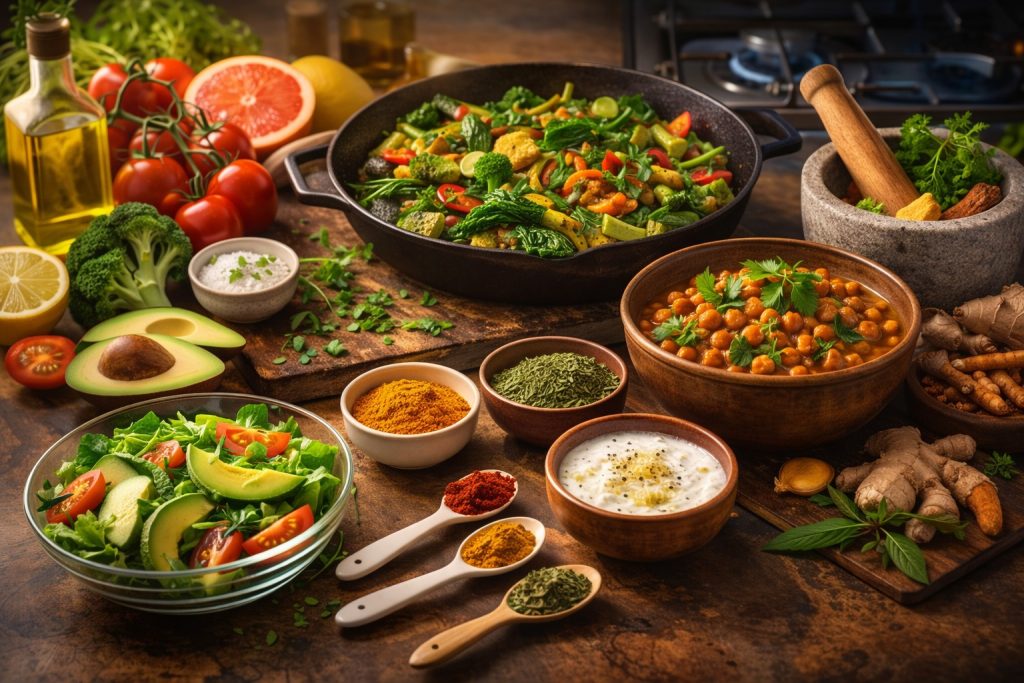
Modern cooking is having a moment of self-reflection. Concepts like acid–base balance, flavor layering, gut health, and anti-inflammatory meals dominate food media. While these ideas are useful, they often stop at chemistry or taste. Ayurveda—one of the world’s oldest food systems—approaches cooking from a different angle altogether: how food behaves in the body, not just on the plate.
Ayurvedic cooking doesn’t require Indian recipes or exotic ingredients. Its principles apply just as well to a Mediterranean lunch, a British roast, or a plant-forward weekday dinner. Here are five Ayurvedic cooking tips—and how they differ from modern culinary thinking.
1. Think Digestive Strength, Not Acid–Base Alone
Modern nutrition often frames food around acid vs alkaline balance. Ayurveda looks deeper. It asks: Can you digest this food right now?
Two people can eat the same “alkaline” meal and have opposite reactions. Ayurveda focuses on digestive fire (agni)—the body’s ability to process food efficiently. A lightly cooked vegetable may be ideal for one person and bloating for another.
Ayurvedic tip:
Cook foods to support digestion; warm, moist, and properly spiced, rather than chasing acid or alkaline labels.
2. Balance Flavors for the Body, Not Just the Palate
Modern cooking emphasizes contrast: salty + sweet, fat + acid, heat + cool. Ayurveda also values balance—but through six tastes: sweet, sour, salty, pungent, bitter, and astringent.
Each taste affects the body differently. Sweet nourishes and grounds. Bitter cleanses. Pungent stimulates. Meals that lean too heavily on one taste—even if delicious—can throw the system off over time.
Ayurvedic tip:
Aim for gentle flavor completeness rather than dramatic contrast. A simple dish with three to four tastes often digests better than a bold, highly layered one.
3. Timing Matters More Than Calories
Modern diets focus on what and how much to eat. Ayurveda focuses equally on when.
Digestive strength naturally peaks around midday and weakens in the evening. Eating heavy foods late—even if “healthy”—can strain digestion and sleep.
Ayurvedic tip:
Eat your largest, most complex meal when digestion is strongest, not when your schedule demands it.
4. Cooking Method Changes Food’s Effect
Modern cooking debates raw vs cooked, fried vs baked, processed vs whole. Ayurveda evaluates cooking methods by how they change a food’s qualities—light, heavy, dry, oily, heating, or cooling.
Raw salads may be nutrient-dense but can overwhelm digestion for many people. Light sautéing or steaming can make the same food far more usable.
Ayurvedic tip:
Choose cooking methods that transform food into something your body can absorb easily, not just something that preserves nutrients on paper.
5. Personalization Beats Universal “Healthy” Rules
Modern food advice tends to universalize: avoid carbs, eat low-fat, go high-protein, cut sugar. Ayurveda rejects one-size-fits-all rules.
Food that energizes one person may exhaust another. Climate, season, stress, age, and constitution all matter.
Platforms like CureNatural’s Ayurveda online courses are helping translate these principles into modern life—through structured learning and practical tools that show how Ayurvedic cooking applies to everyday meals, not just traditional cuisine.
Ayurvedic tip:
Stop asking whether a food is “good” or “bad.” Ask whether it’s appropriate for you, today.
A Different Relationship With Cooking
Ayurveda doesn’t compete with modern cooking science—it complements it. Where modern nutrition measures nutrients, Ayurveda observes outcomes. Where trends chase novelty, Ayurveda prioritizes consistency and digestion.
You don’t need to cook Indian food to cook Ayurvedically. You only need to cook with awareness: of timing, balance, preparation, and your own body’s response. That shift alone can turn everyday meals into a form of long-term nourishment, not just fuel.

About author


Leave a reply