
Human Resource Management Strategies Strengthening Workforce Development and Organizational Success
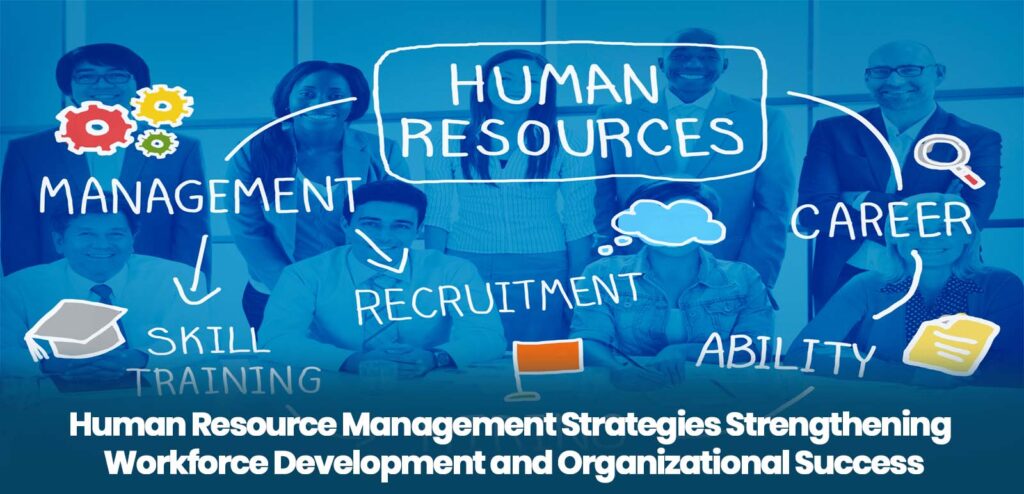
Organizations thrive when people thrive. Growth is not just about profits; it is about people. Employees remain the backbone of every enterprise, and their development determines long-term success. Effective planning, training, and engagement transform ordinary workplaces into extraordinary ones.
Human Resource Management Strategies provide the framework for aligning employee development with organizational goals. The emphasis is on recruiting, training, engaging, and retaining individuals to build a capable and motivated workforce.
Workforce Development as a Core Priority
Workforce development is not an afterthought but rather a primary focus. Human resource practitioners assess industry dynamics, identify weaknesses within the organization, and create development programs geared towards meeting future needs.
Employee, mentoring, and leadership training programs ensure that no one stands still. Employees keep improving at what they do, and the organization can leverage the benefits of resilience and adaptability.
Employee Engagement and Motivation
Productive employees are engaged employees. HR departments engage their employees by having reward programs, open communication channels, and career advancement opportunities. Engagement can be maintained if employees feel appreciated and respected.
Incentives, flexibility at work, and wellness initiatives help build a conducive working environment. Engagement is more than offering rewards; it’s about building a work culture where employees are engaged with the organizational objectives.
Performance Management Systems
Performance management is not confined to an annual appraisal. Constant feedback, measurable objectives, and coaching help employees gain a clearer understanding of what is expected of them.
Modern HR technology is used to monitor their performance and recognize strengths and weaknesses. This helps maintain control while contributing to personal development.
Linking HR Strategies to Success
Organizational success depends on how effectively HR strategies are implemented. When workforce development is prioritized, productivity increases, innovation flourishes, and customer satisfaction improves. Human Resource Management Strategies provide the framework for aligning employee potential with organizational objectives. This alignment creates a cycle of growth where both employees and the organization benefit.
Learning and Development Programs
Learning and developmental programs are necessary to ensure that employees stay current on developments in their industries. Training, online learning, and cross-functional projects improve skill sets and change perspectives. Employees who continue to learn become assets in problem-solving and innovation. Companies that value learning able to compete in today’s ever-changing markets.
Leadership Development
Workforce planning involves leadership development, which entails identifying highly talented workers and grooming them to become effective leaders through mentoring and training.
Good leaders motivate their teams, solve challenges as they arise, and are responsible for an organization’s success. It is important to have leadership pipelines to achieve stability within the organization.
Academic Perspective
Students studying HRM often seek guidance to understand these strategies in depth. Many turn to assignment help platforms to gain clarity on workforce development concepts. These resources provide practical insights into how HR strategies are applied in real organizations. While diversity provides new insights, inclusion ensures that all voices are heard. HR approaches that ensure diversity foster creative, collaborative work environments.
Inclusivity leads to greater respect, fewer conflicts, and more teamwork. This clearly translates into organizational effectiveness and success. Diversity and inclusion are not fads; they are essentials.
Recruitment and Talent Acquisition
Recruitment goes beyond filling up positions since it involves seeking out people whose ideologies match the organization’s ideology. Efficient recruitment processes involve detailed job description, proper targeting, and conducting interviews.
Organizations that invest in talent acquisition end up with teams that have the potential to create innovations. An efficient recruitment process also lowers turnover rates, saving organizations significant time and money.
Technology in HR
The advent of technology has completely changed how HR functions operate. The recruitment process, performance monitoring, and other activities can be made more efficient and effective with the use of technology. AI can be used to analyze employee data, identify potential risk factors for turnover, and design training modules tailored to different individuals. Implementing HR strategies through technology ensures their effectiveness.
Practical Applications
Organizations can implement HR strategies through succession planning, wellness programs, and training. In academic contexts, learners often explore these applications through case studies. Some even seek HRM assignment help to analyze complex scenarios and prepare structured solutions.
Challenges in Workforce Development
Workforce development, although important, is faced with difficulties such as lack of resources, resistance to change, and skill gaps. These difficulties must be solved by HR practitioners in an innovative way. Management and employee collaboration will ensure that all difficulties are dealt with appropriately.
Ethical Considerations
Ethical conduct is an integral component of HR management. The hiring process, equality of opportunity, and protection of employees’ rights should be observed under all circumstances.
It helps create a positive image and earn people’s trust when the organization maintains its ethical stance. Ethics are the essence of sustainability in HR management.
Academic Relevance
Students often analyze HR strategies in detail, exploring their impact on workforce development. Some even search for ways to pay someone to do my assignment when deadlines approach. While this may provide short-term relief, genuine learning comes from engaging with the concepts directly.
Case studies show us how organizations apply their HR strategies. For instance, companies that train their employees usually demonstrate high efficiency and low turnover. Such practical examples give important insights for both professionals and students.
Organizational Culture and Values
The organizational culture determines the way employees communicate, work together, and help achieve common objectives. It ensures that the culture is based on trust, respect, and responsibility, enabling individuals to do their best. Values like integrity, openness, and cooperation are used in decision-making and business management. If the culture aligns with the organization’s objectives, employees feel integrated and motivated.
Conclusion
Workforce development is the cornerstone of organizational success. By investing in employees, organizations build resilience, adaptability, and innovation. Human Resource Management Strategies ensure that workforce development is not left to chance but guided by structured planning and ethical practices. When employees thrive, organizations achieve sustainable success.
Strong HR strategies do not just manage people; they empower them, and empowered people build extraordinary organizations.

About author


Leave a reply