
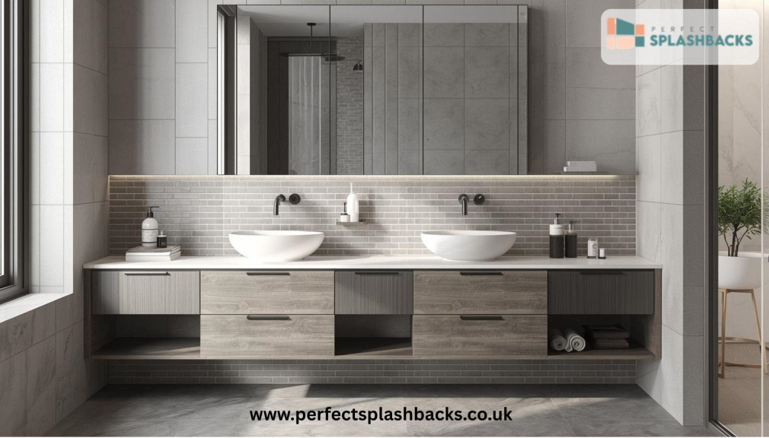
A bathroom splashback is a small detail that many people overlook, but it can make a big difference in the room’s style and protection. It protects your walls from water damage, spares you from frequent cleanup, and can be the feature that ties the overall bathroom look together as part of your wider bathroom design.
Ensuring the right fit is about more than just keeping splashes away. The height and width are what most affect how balanced, intentional, and well-thought-out your bathroom feels. For this reason, this article doubles as a handy bathroom splashback size guide, outlining standard splashback measurements, the appropriate installation height for different types of fixtures, and no-nonsense advice so you can get it right the first time.
Standard Bathroom Splashback Dimensions
Depending on the installation location, most splashbacks are available in standard size ranges. Of course, every bathroom layout is unique, but these standard splashback dimensionscan serve as a helpful reference.
| Location | Typical Width | Typical Height |
| Vanity splashback | 600–1200 mm | 100–200 mm |
| Basin splashback | 500–900 mm | 100–150 mm |
| Bath splashback | 1500–1700 mm | 300–450 mm |
These dimensions are a good fit for most plans, and it is also convenient to find such splashbacks in stores. But they’re guidelines, not rules of law. It’s always best to review the bathroom splashback, fittings, mirrors, and wall space, as they can all work together before you decide on a final design.
Perfect Height For a Bathroom Splashback
The ideal splashback height has no universal standard measurement. Some of the main influences are:
- Type of fixture: Basins usually require less covering compared to baths, where splashing occurs more often.
- Room proportions: Higher walls may be better suited to a slightly taller splashback, so it doesn’t appear lost or missed.
- Usage patterns: Bathrooms for families or shared spaces will definitely benefit more from increased protection.
So, how to choose splashback height sensibly? Splashbacks for sinks and vanities typically look good when they are 100-200 mm high, and the spa is generally 300-450 mm high. In short, a height that protects walls without dominating the space or interfering with mirrors and shelving is the right height.
Custom vs Standard Splashback Sizes
You can get away with standard sizes because they are convenient and cost-effective, but they may not always be the best solution. Unconventional bathroom plans, slanted or unusually shaped walls, or bold, daring design elements will definitely benefit from tailor-made solutions.
Opting foracrylic sheets cut to size gives you the luxury of customising your bathroom splashback just the way you want it. This comes especially handy when you want to put together the most beautiful bathroom interior planning, where everything has to be in the most perfect proportion.
| Feature | Standard Sizes | Custom Solutions |
| Best For | Convenience and cost-effectiveness. | Unconventional plans, slanted walls, or bold designs. |
| Key Benefit | Quick and easy to source. | Perfect proportions and design flexibility. |
| Material Perk | Ready-made availability. | Acrylic sheets can be cut to any specific size. |
| Requirements | Fits typical layouts. | Requires precise measurements of fittings, taps, and sockets. |
Things to remember when ordering custom sizes:
- Take most measurements of width and height.
- Take note of the locations of taps, sockets, and other fittings on the wall.
- Check everything – the final measurements – before you give the green light.
Custom splashbacks offer the freedom to create a feature piece that is fully aligned with your finish, while still allowing you to remain flexible before finalising.
Design Tips for Choosing Splashback Size
An aesthetically pleasing bathing area results from achieving harmony. Your splashback should blend comfortably with the surrounding elements rather than dominate the room.
- Line up with mirrors: A splashback that lines up exactly with the bottom of a mirror is designed.
- Small bathrooms: Lower splashbacks keep the space open.
- Bigger bathrooms: Higher splashbacks can create a more structured look in the room and provide visual focal points.
Colour and texture are also very important. Neutral colours are calming and classic, and a pop of colour on the finish can be subtle or bold. Thoughtfulbathroom interior planning ensures the splashback complements rather than dominates.
Splashback Materials and Their Impact on Size & Height
The choice of material can dictate the finish and the amount of flexibility.
- Acrylic: It is very lightweight and easy to fit. You can also place an order foracrylic sheets cut to size, making it easy to taper your splashback to the ideal height.
- Glass: Hardwearing and sophisticated-looking, glass is somewhat unforgiving if measurements are slightly off.
- Tiles: More traditional, but the grout could break the clean lines.
- Stone: Graceful but heavy and not easy to tailor.
If you want precise sizing with minimal fuss, acrylic offers a strong balance between style and practicality, especially when working within defined standard splashback dimensions.
Common Mistakes to Avoid When Choosing Splashback Size
Even a small slip can affect the final appearance:
- Install splashbacks at a standard height to avoid leaving the walls bare. Installing splashbacks at a height that leaves the wall exposed.
- Picking a height that is not in coordination with the mirrors or lighting.
- Disregarding proportions when doingbathroom interior planning.
- Selecting materials that are challenging to cut or maintain.
Before you buy, confirm your dimensions and picture how the bathroom splashback will look against the rest of your room’s layout.
Conclusion
Getting the size right is not just about the technical specs; it’s also important for making your bathroom functional and attractive. Thisbathroom splashback size guide shows how knowing standard sizes, your preferred splashback height, and when to go custom can make all the difference. Precisely measure and be considerate in your calculations, and your splashback will be both practical and stylish in your bathroom design.
Frequently Asked Questions
1. What is the standard height for bathroom splashbacks?
Most basin and vanity splashbacks are 100-200 mm, whereas bath areas are 300-450 mm.
2. How do I choose the right splashback height for my bathroom?
Ponder the type of fixture, the proportions of the room, and the daily usage when making up your mind.
3. Can acrylic splashbacks be cut to size?
Sure, acrylic sheets are easy to work with and can be cut to size, making them ideal for custom layouts.
4. Does the material of the splashback affect the choice of size?
Of course. Some materials allow you to change the height and width more freely than others.


Leave a reply