
Creating Productive Break Areas: Planning Canteen Facilities for Industrial Workplaces
Introduction
A workplace canteen serves a practical purpose in warehouses, factories, distribution centres and other industrial environments. Employees working through demanding shifts need a dedicated area where they can take scheduled breaks, eat meals and step away from operational activity. For this reason, the design of a canteen should be considered as part of the wider workplace infrastructure rather than simply as a collection of tables and chairs.
Industrial canteens also face different requirements from conventional office break rooms. They may need to accommodate larger workforces, staggered shifts, frequent daily use and limited floor space. Furniture therefore needs to balance durability, comfort, capacity and ease of maintenance.
Effective workplace canteen planning starts with understanding how the facility operates. Workforce numbers, shift patterns, available space and expected usage all influence furniture selection and layout. When these factors are considered together, staff dining areas can remain practical, organised and suitable for demanding commercial environments.
Understanding the Different Needs of Industrial Workplace Canteens
Industrial workplaces can have very different canteen requirements depending on their workforce and operating schedules. A small workshop may only need a compact staff room, while a large distribution centre or manufacturing facility may have hundreds of employees using a shared dining area throughout the day.
Shift patterns are particularly important. In facilities operating multiple shifts, employees may use the canteen in several concentrated periods rather than throughout the entire working day. A seating arrangement that appears sufficient based on the total workforce may become overcrowded if a large proportion of employees take breaks simultaneously.
The nature of the workplace also influences the type of facility required. Manufacturing environments may need furniture that can withstand frequent use and regular cleaning, while warehouse operations may prioritise efficient use of limited floor space. Facilities with outdoor areas may also consider additional seating options to increase capacity during suitable weather.
The canteen’s relationship with the wider workplace should be considered as well. It should be accessible without unnecessarily interfering with production, storage or material-handling operations. A suitable location can make break periods more convenient while maintaining separation between food areas and industrial activity.
Selecting Tables and Seating for High-Use Environments
Furniture selection is one of the most important aspects of designing a commercial staff canteen. Tables and seating must withstand repeated daily use while remaining comfortable enough for employees taking scheduled breaks.
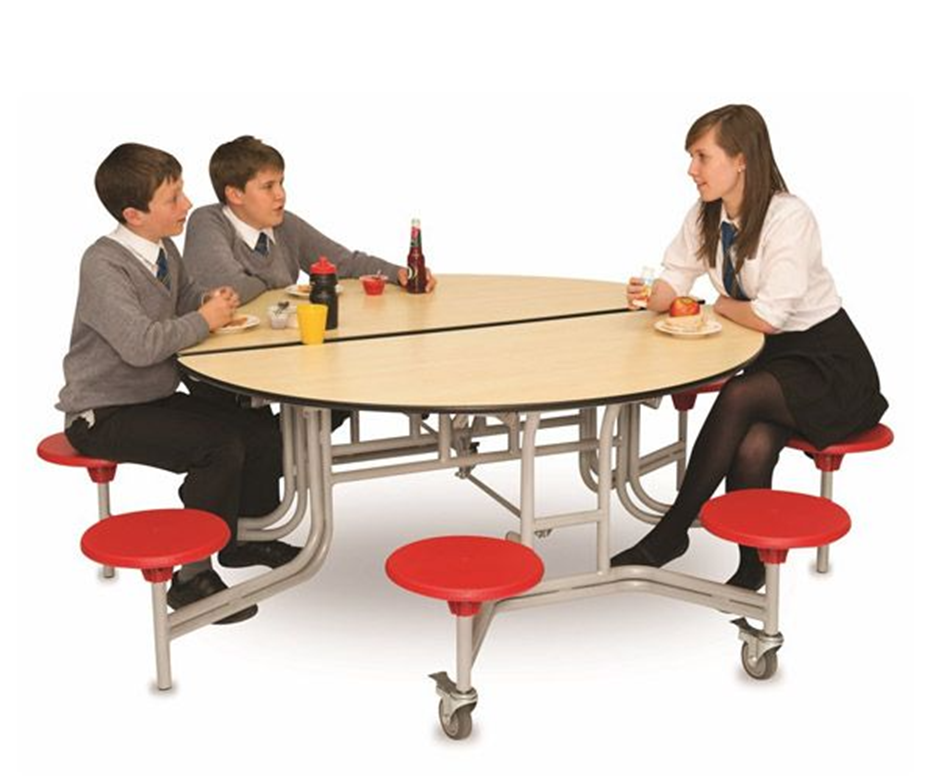
Different seating formats provide different practical benefits. Conventional chairs can offer flexibility because they can be moved or rearranged as requirements change. Benches can provide efficient seating along tables and may work particularly well where space needs to be used carefully. Integrated fast-food units can combine seating and table surfaces into a single configuration, reducing the number of separate furniture components required.
Table dimensions and shapes also influence how efficiently a canteen can accommodate employees. Larger tables can provide greater capacity, but they require sufficient circulation space. Smaller tables may allow more flexible arrangements and can make it easier to adapt a room to different workforce requirements.
Durability is equally important. Industrial canteen furniture can experience substantially more frequent use than furniture in occasional meeting areas. Materials should therefore be selected according to expected usage, cleaning requirements and the surrounding workplace conditions.
For example, Direct2U offers commercial canteen units designed for staff rooms, restaurants and similar environments. Its Eco Fast Food Units include two-, four- and six-seater configurations, with moulded recycled polypropylene seating and laminated table surfaces.
Comfort should not be overlooked in favour of durability. Employees using a canteen need adequate seating support during meal and rest periods. A well-designed combination of comfortable seating, appropriate table height and sufficient personal space can make a canteen considerably more functional.
Designing Layouts Around Shift Patterns and Available Space
A successful industrial canteen layout needs to reflect how employees actually use the space. Simply filling a room with as many tables and chairs as possible can create congestion, particularly during busy break periods. The layout should instead balance seating capacity with circulation and accessibility.
Staggered shifts can provide an opportunity to use a smaller canteen more efficiently. If different employee groups take breaks at different times, the facility may not need seating for the entire workforce simultaneously. Understanding these patterns allows businesses to assess actual peak demand rather than relying solely on total employee numbers.
The position of tables also affects movement. Clear routes should remain available between entrances, food-service areas, kitchen facilities and seating. Employees should be able to enter, find a seat and leave without creating unnecessary congestion around tables.
Space efficiency becomes particularly important in factories and warehouses where floor space is already dedicated to operational functions. Compact furniture can make use of areas that might otherwise be difficult to furnish. Integrated seating units can also simplify layouts by combining tables and seats into a single arrangement.
Direct2U’s canteen range includes different seating configurations, while its wider workplace furniture offering covers canteen, office, education and other commercial environments. This range can be relevant when a facility needs to coordinate furniture requirements across several workplace areas.
Outdoor dining can provide another option where a suitable external space is available. However, outdoor furniture should be treated as an extension of the canteen rather than a replacement for adequate indoor provision. Weather conditions, accessibility and security all need to be considered before allocating part of the workforce’s break space outdoors.
Balancing Hygiene, Cleaning and Material Selection
Workplace canteens are exposed to food, drinks, spills and frequent contact throughout the day. Furniture therefore needs to be practical to clean and capable of maintaining its appearance under regular use. Material selection should be based not only on visual appeal but also on the cleaning routines and intensity of the environment.
Several considerations can help businesses assess furniture suitability:
- Easy-clean surfaces: Tabletops should have surfaces that can be wiped down efficiently after meals and between different periods of use. Smooth, practical finishes can reduce the time required for routine cleaning and help staff maintain consistent hygiene standards.
- Durable seating materials: Seating should withstand repeated use without becoming difficult to maintain. Materials that are resistant to everyday wear can be particularly useful in facilities where employees use the canteen across multiple shifts.
- Robust frames: Table and seating frames need to cope with frequent movement and everyday impact. Welded steel construction, for example, can provide a durable foundation for furniture intended for commercial environments. Some Direct2U canteen units use welded steel square-tube fabrication with a coated finish.
- Practical cleaning access: Furniture arrangement can affect how easily cleaning teams reach floors and surrounding surfaces. Leaving appropriate circulation space around tables and seating makes routine cleaning more manageable.
- Material suitability: Different workplace environments may require different finishes. Where food preparation or high levels of moisture are involved, materials should be selected with the surrounding conditions and cleaning procedures in mind.
Creating Flexible Canteen Spaces Beyond Mealtimes
A modern workplace canteen does not necessarily need to serve one purpose throughout the day. Depending on the facility, the same area may function as a dining space during scheduled breaks and as an informal meeting or employee breakout area at other times.
This makes flexibility an important consideration when selecting furniture. Movable tables and chairs can allow the room to be rearranged for different activities. A space that normally accommodates individual meals could potentially be configured differently for staff meetings, training sessions or workplace gatherings.
Integrated seating can provide an alternative where the primary purpose is dining. Fast-food-style units create defined seating arrangements and can make efficient use of available space. Direct2U’s canteen range includes Eco Fast Food Units in several seating capacities, with single- and double-entry options available for certain configurations.
The choice between fixed, integrated and movable furniture should therefore depend on how the space is expected to operate. A facility with frequent meetings may benefit from furniture that can be rearranged, while a large factory canteen with predictable meal periods may prioritise durable, high-capacity seating.
Colour and appearance can also influence how a space feels without compromising its industrial practicality. A well-maintained canteen with coordinated furniture can provide a clear visual distinction from production areas and create a more appropriate environment for employees during their breaks.
Planning a Canteen Upgrade Around Long-Term Workplace Requirements
Replacing workplace furniture can represent a significant investment, particularly for facilities with large employee populations. A long-term approach can help businesses avoid selecting furniture that meets immediate needs but becomes unsuitable as workforce requirements change.
Before upgrading a canteen, several factors should be reviewed:
- Current and projected workforce size: Seating requirements should reflect present staffing levels while taking reasonable account of expected workforce changes. A facility experiencing expansion may need additional capacity rather than simply replacing existing furniture on a like-for-like basis.
- Peak break periods: The number of employees using the canteen at the same time is more relevant than total headcount when calculating seating requirements. Shift schedules can help determine the actual peak demand.
- Available floor space: Measurements should account for tables, seating, entrances and circulation routes rather than focusing solely on the area available for furniture. This helps prevent overcrowding once the canteen is fully furnished.
- Furniture standardisation: Using compatible furniture styles and dimensions across multiple workplace areas can make future replacements and extensions easier. Standardisation may also simplify maintenance and procurement.
- Durability and lifecycle: Commercial furniture should be assessed according to expected usage over several years. Selecting products based on durability and practical maintenance requirements can help businesses plan more effectively for long-term ownership.
- Project planning and installation: Larger workplace projects may involve several furniture categories and multiple areas of a facility. Direct2U states that its sales team supports large projects and bulk quantities with tailored quotations and project assistance from enquiry through installation.
Conclusion
A productive industrial workplace canteen requires more planning than simply adding tables and chairs to an available room. Workforce size, shift patterns, peak break periods, available floor space and the intensity of daily use all influence the most suitable furniture and layout.
Durability and hygiene are particularly important in warehouse and factory environments, where furniture may be used repeatedly across several shifts. Easy-clean surfaces, robust construction and practical layouts can support consistent maintenance, while suitable seating and table arrangements provide employees with a functional place to take their breaks.
Flexible furniture can also allow a canteen to support activities beyond mealtimes, while long-term planning helps businesses accommodate changes in workforce size and workplace requirements. By considering the canteen as an integral part of workplace infrastructure, industrial facilities can create staff areas that remain practical, durable and adaptable over time.

About author


Leave a reply