
Christmas Curtain Lights for Holiday Backdrops
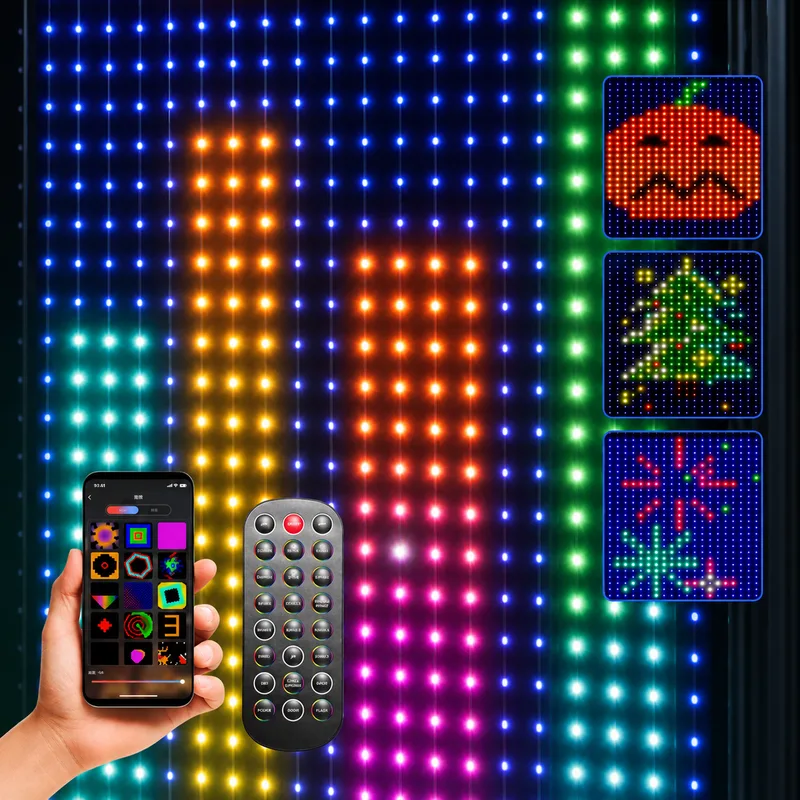
Christmas Curtain Lights: String Light Layouts for Holiday Windows and Backdrops
Christmas curtain lights are a simple form of decorative lighting made by arranging string lights into a curtain-style layout. A horizontal main cable is fixed at the top, and several vertical light strings hang down from it. After installation, the whole structure looks like a light curtain, which is why it is commonly used on windows, walls, entrances, stages, and holiday backdrops.
The product itself is not complicated, but the visual effect is very useful for seasonal decoration. A single string light is often used to outline a tree, roof, railing, or frame. Curtain lights use the same basic idea, but the hanging layout allows the lights to cover a wider vertical area. This makes them suitable for spaces that need a bright background rather than a simple light line.
In Christmas displays, curtain lights are often used behind ornaments, gift boxes, wreaths, garlands, snowflake decorations, retail products, or event signs. They are not always the main decoration. More often, they work as a background layer that makes the whole display feel brighter and more complete.
A Curtain Effect Made from String Lights
The main difference between ordinary string lights and curtain lights is the way the lights are arranged. Ordinary string lights usually run in one direction. They can be wrapped, hung, or fixed along an edge. Curtain lights are made by placing multiple light strings under one top cable, so the lights fall downward in repeated vertical lines.
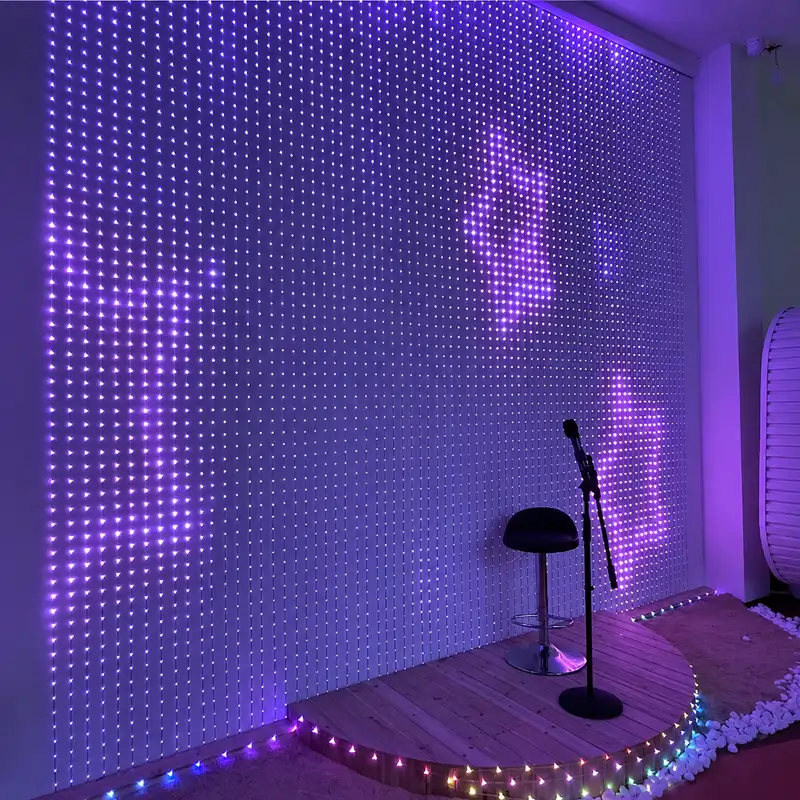
This layout creates a more even light surface. When installed on a glass window, the lights can fill the background behind a product display. When installed on a wall, they can turn an empty surface into a decorative lighting area. When used behind a photo setup, they help create depth without adding heavy structures.
Because curtain lights are based on string light construction, many details can be adjusted according to the project. The width of the main cable, the length of each hanging string, the distance between drops, the LED spacing, the cable color, and the light color all affect the final look.
Where Curtain Lights Are Commonly Used
Curtain lights are often used in retail windows during Christmas and New Year promotions. A plain window can look empty at night, especially when the display relies only on products or printed signs. Hanging light strings add movement, brightness, and a stronger holiday feeling without blocking the view completely.
They are also used in shopping malls, hotels, restaurants, event booths, wedding spaces, and temporary exhibition areas. In these places, decoration teams often need something that is easy to install, easy to remove, and visually noticeable from a distance. Curtain lights fit this need because they can cover a large visual area while taking up very little space.
For photo areas, curtain lights are usually placed behind Christmas trees, gift boxes, brand logos, floral arches, or themed props. The hanging LED strings create a soft background, making the scene look fuller in photos. This is one reason they are commonly seen in holiday events and commercial seasonal displays.
For different holiday projects, Christmas curtain lights may be selected according to drop length, light color, cable color, voltage, controller mode, and installation position.
Choosing the Right Layout
Before using curtain lights in a project, the first thing to confirm is the installation area. The width of the top cable should match the window, wall, entrance, or backdrop where the lights will be installed. If the width is too short, the decoration may look unfinished. If it is too wide, the extra cable may be difficult to hide.
The drop length is also important. Short drops are suitable for windows, counters, shelves, and smaller indoor areas. Longer drops are better for walls, stage backgrounds, hotel lobbies, glass partitions, and larger photo areas. The goal is to let the hanging strings fit the space naturally instead of looking forced.
LED spacing affects the density of the light. Wider spacing creates a lighter and simpler effect. Closer spacing creates a brighter and fuller curtain. For Christmas displays, the right spacing depends on whether the lights are used as a soft background or as one of the main visual elements.
Color and Cable Choices
Light color changes the atmosphere of the whole display. Warm white is often used in hotels, restaurants, weddings, and elegant Christmas windows because it feels soft and comfortable. Cool white creates a cleaner winter effect and works well with snowflake decorations, white trees, silver ornaments, and glass surfaces.
Multi-color lights are more suitable for festive scenes, party backdrops, Christmas markets, and lively retail displays. RGB or flashing modes can make the scene more dynamic, but they should be used carefully. In some commercial spaces, too much movement may distract from products or signage.
Cable color is easy to ignore, but it affects the final appearance during the day. White cable works better on light-colored walls, white windows, snow-themed displays, or bright backgrounds. Green or dark cable is better for garlands, trees, darker walls, and outdoor decorative areas.
Installation Details That Matter
Curtain lights usually start with the top cable. Once the top cable is fixed evenly, the vertical light strings can hang down naturally. The drops should not be pulled too tightly, because that can make the layout look stiff and may also put pressure on the wires.
For temporary events, installation speed is important. Decoration teams often work with limited setup time, especially in shopping malls, exhibitions, hotels, and event venues. Curtain lights are useful because they can be installed quickly with hooks, ties, clips, frames, or existing structures.
If several sets are connected together, the power layout should be planned before installation. Uneven wiring, overloaded sockets, or poorly hidden cables can affect both safety and appearance. For outdoor or semi-outdoor scenes, the plug, connector, controller, and cable should match the actual environment.
Curtain Lights in Holiday Display Design
In seasonal display design, curtain lights are often used to fill vertical space. They can turn a blank window, wall, glass surface, booth background, or stage edge into a lighted area. This is especially useful when the decoration needs to be visible at night but cannot use large props.
They also work well with other Christmas elements. Garlands can cover the top cable. Gift boxes can be placed in front of the hanging lights. Snowflake ornaments can be layered over the light strings. A Christmas tree or brand sign can stand in front of the curtain effect to create a more complete display.
The strength of curtain lights is not that they are complex. Their value comes from a simple string light layout that creates a wide decorative surface. For windows, walls, entrances, stages, and photo backdrops, this makes them a practical choice in many holiday and event decoration projects.
FAQ
Are curtain lights made from string lights?
Yes. Curtain lights are usually made by arranging multiple string light drops under one horizontal main cable. The layout creates a hanging light curtain effect.
Where are Christmas curtain lights usually installed?
They are commonly installed on windows, walls, storefronts, entrances, glass partitions, stage backgrounds, event booths, hotel lobbies, restaurants, and photo areas.
What should be checked before choosing curtain lights?
Important details include top cable width, drop length, number of hanging strings, LED spacing, cable color, light color, voltage, plug type, controller mode, and waterproof level.
Are curtain lights suitable for outdoor decoration?
Some curtain lights can be used outdoors, but the waterproof level, connectors, plug, controller, and installation method must match the outdoor environment.
What light color is suitable for Christmas curtain lights?
Warm white is suitable for elegant and cozy holiday displays. Cool white works well for winter themes. Multi-color or RGB lights are better for festive windows, party areas, and lively event scenes.

About author


Leave a reply