
Planning a Bathroom Renovation? Choosing the Right Privacy Glass
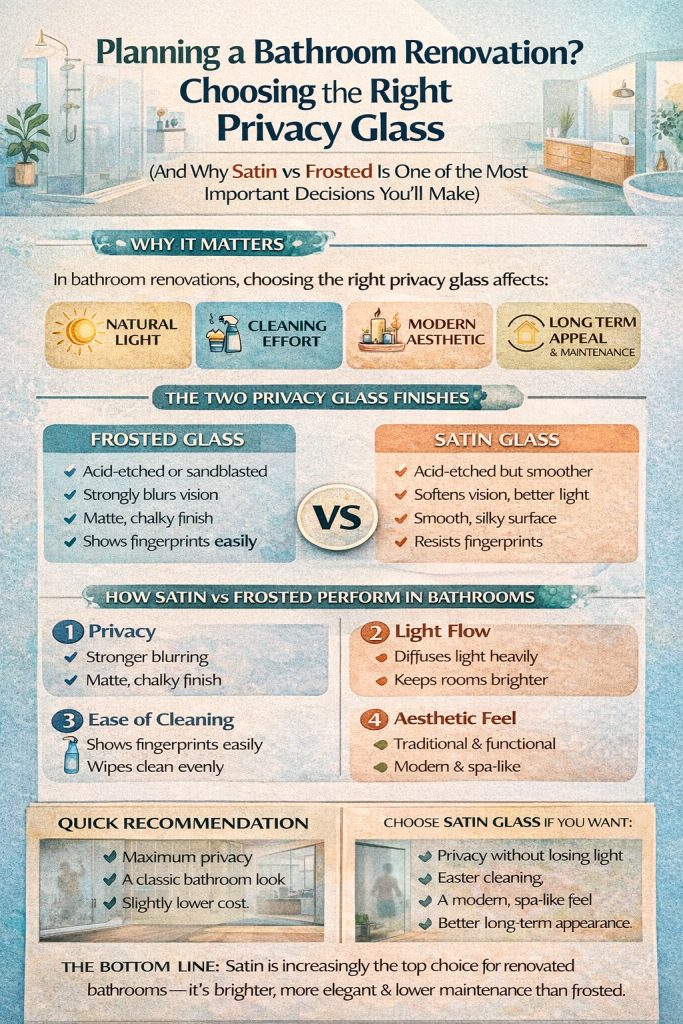
(And Why Satin vs Frosted Is One of the Most Important Decisions You’ll Make)
Bathroom renovations are famously full of big-ticket decisions—tiles, layouts, plumbing fixtures, underfloor heating, lighting schemes, and colour palettes. Yet one of the most influential elements in how a finished bathroom feels is often treated as an afterthought:
Privacy glass.
Whether you’re installing a walk-in shower, replacing a bathroom window, adding a WC door, or dividing an en-suite from a bedroom, the glass finish you choose shapes:
- How bright the space feels
- Whether the room seems open or boxed-in
- How much cleaning you’ll do week to week
- How luxurious the bathroom appears
- How future buyers perceive the renovation
Two finishes dominate modern bathrooms:
Frosted glass and satin glass.
They look similar at first glance. Both blur views and diffuse light. Both can be supplied as safety glass. Both are widely used in residential projects.
But in daily life—and especially in high-humidity, high-use environments like bathrooms—they behave very differently.
This in-depth guide explains:
- What frosted and satin glass really are
- How they perform in bathrooms
- Which one suits different renovation goals
- How they affect cleaning, light, resale appeal, and longevity
- And how to make a confident, future-proof choice
Why Privacy Glass Matters More Than Ever in Bathrooms
Modern bathrooms are no longer purely functional. In many homes they’ve become spa-like retreats—places to relax, decompress, and start the day calmly.
Design trends now favour:
- Walk-in showers instead of enclosed cubicles
- Frameless glass screens
- Borrowed light from adjacent rooms
- Open en-suites
- Minimalist layouts
- Natural materials and soft tones
Glass plays a central role in all of this. It lets daylight travel, keeps spaces visually connected, and avoids the cramped feeling solid walls can create—especially in compact properties.
But bathrooms also demand discretion.
Neighbours, family members, guests, and street-facing windows mean privacy is non-negotiable. The challenge is achieving that privacy without sacrificing brightness, elegance, or ease of maintenance.
That’s exactly what frosted and satin finishes are designed to do—but in subtly different ways.
What Is Frosted Glass?
Frosted glass also known as sandblasted glass is produced by acid-etching or sandblasting the surface of clear glass. These processes roughen the outer layer, scattering light in multiple directions and preventing clear views through the pane.
Typical Characteristics of Frosted Glass
- Strong obscuring effect
- Matte, chalky appearance
- Noticeably textured surface
- Heavy light diffusion
- Shows fingerprints and water marks easily
- Often slightly cheaper than satin
Frosted glass has been used in bathrooms for decades, particularly for:
- WC doors
- Bathroom windows
- Shower enclosures
- Decorative etched panels
In many people’s minds, “privacy glass” is almost synonymous with frosted glass.
What Is Satin Glass?
Satin glass is also acid-etched—but with a more controlled, uniform chemical process that creates a smoother surface rather than a gritty one.
It still obscures vision, but the finish feels silky to the touch and diffuses light in a softer, more even way.
Typical Characteristics of Satin Glass
- Excellent privacy with better light transmission
- Smooth, velvety surface
- More fingerprint-resistant
- Easy to clean evenly
- Refined, contemporary appearance
- Often used in premium interiors
Satin glass has become especially popular in:
- High-end shower screens
- En-suite partitions
- Sliding bathroom doors
- New-build apartments
- Architect-designed renovations
Satin vs Frosted in Bathrooms: The Real-World Comparison
Let’s examine how each finish performs in the conditions bathrooms actually face: steam, splashes, daily contact, artificial lighting, and long-term wear.
1) Privacy: Which One Hides More?
Both finishes obscure direct views, but the character of that privacy differs.
Frosted Glass
- Produces strong diffusion
- Silhouettes are heavily blurred
- Feels more opaque
- Creates a sense of full visual separation
Satin Glass
- Also blocks clear vision
- Silhouettes appear softer and less harsh
- Feels lighter and more open
- Less visually “solid”
Bathroom takeaway:
If maximum concealment is the top priority—such as for WC doors or windows facing neighbouring properties—frosted glass still has a slight edge.
For shower screens and en-suite dividers where privacy is needed but openness is desirable, satin glass often feels more comfortable.
2) Light Transmission: A Big Deal in Bathrooms
Bathrooms frequently rely on limited natural light—particularly in terraces, apartments, or properties with internal layouts.
How privacy glass handles daylight can dramatically change how the room feels.
Frosted Glass and Light
- Scatters light aggressively
- Can dull the room slightly
- Works best when plenty of daylight is already available
Satin Glass and Light
- Allows more light to pass through
- Keeps spaces bright and airy
- Makes small bathrooms feel larger
Winner for light-hungry bathrooms: Satin glass.
In compact renovations, this single factor often tips the decision.
3) Cleaning & Maintenance: The Everyday Reality
This is where many homeowners only discover the difference after installation.
Bathrooms are high-contact environments: hands on doors, water droplets on screens, soap residue, shampoo splashes, steam, and condensation.
Frosted Glass Maintenance
- Fingerprints show easily
- Soap streaks can look patchy
- Water spots are more visible
- Requires frequent wiping
- Harsh cleaners can damage the etched surface
Satin Glass Maintenance
- Resists marks better
- Cleans more evenly
- Maintains a uniform look
- Needs less daily attention
For busy households, families, and rental properties, satin glass is often far less demanding.
4) Design Impact: How the Finish Shapes the Space
Privacy glass doesn’t sit quietly in the background—it contributes strongly to the bathroom’s character.
Frosted Glass Aesthetic
- Functional
- Familiar
- Slightly utilitarian
- Can feel traditional
Satin Glass Aesthetic
- Calm and minimal
- Spa-like
- Contemporary
- High-end feel
If your renovation aims for a hotel-inspired look, satin glass generally aligns better with modern tile formats, slim frames, and frameless installations.
5) Longevity & Visual Ageing
Bathrooms put materials under stress. Heat, humidity, cleaning chemicals, and daily use all accelerate wear.
Over time:
- Frosted finishes may develop uneven appearance where frequently touched.
- Satin finishes tend to stay visually consistent longer.
For homeowners planning to stay in a property for many years—or landlords wanting durable finishes—this difference matters.
Where Each Finish Works Best in Bathroom Renovations
Rather than treating this as an all-or-nothing decision, many successful renovations use both finishes strategically.
✅ Choose Frosted Glass For:
- WC doors
- Bathroom windows facing close neighbours
- Utility areas
- Budget-focused projects
- Spaces where absolute privacy is essential
✅ Choose Satin Glass For:
- Walk-in shower screens
- En-suite partitions
- Sliding bathroom doors
- Compact bathrooms needing brightness
- Contemporary renovations
- Premium homes
- Rental properties prioritising easy upkeep
Safety First: Finish vs Glass Type
An extremely important point:
The finish does not determine safety—the glass specification does.
Bathrooms almost always require safety glass, typically:
- Toughened (tempered) glass for impact resistance
- Laminated glass in certain configurations or regulations
Shower screens, doors, and low-level panels should never use ordinary annealed glass regardless of whether the surface is frosted or satin.
Always confirm:
- Thickness
- Toughening
- Laminating
- Edge finishing
- Fixing system compatibility
before finalising any privacy finish.
How Privacy Glass Affects Resale Value
Will switching from frosted to satin glass add tens of thousands to a valuation?
Not directly.
But finishes strongly influence buyer psychology.
During viewings, buyers subconsciously register:
- How bright the bathroom feels
- Whether it looks recently renovated
- How easy surfaces appear to clean
- Whether design choices feel current
- Whether the space photographs well
Satin glass often performs better on these fronts, especially in mid-to-high-end homes.
Frosted glass remains practical—but in competitive markets, satin tends to signal a more premium refurbishment.
Budget Considerations
Costs vary by size and supplier, but typically:
- Frosted glass is slightly cheaper.
- Satin glass commands a small premium.
However, that difference is often modest compared to the total renovation budget—and may be offset by:
- Lower cleaning effort
- Longer-lasting appearance
- Stronger buyer appeal
When tiles, fixtures, and labour run into thousands, spending a little more on a finish you’ll live with daily can be a smart trade-off.
Practical Questions to Ask Before Deciding
When choosing between frosted and satin, run through these:
- Is this panel touched frequently?
- Does the room struggle for natural light?
- Is maximum concealment essential here?
- Am I aiming for a traditional or modern look?
- Will I sell or rent this property in the future?
- Do I want lower maintenance day-to-day?
- Is this a guest WC or a main family bathroom?
Your answers usually make the decision clear.
Quick Decision Guide
Pick Frosted Glass If You Want:
- Maximum visual blocking
- A classic bathroom look
- Slightly lower upfront cost
- Window glazing near neighbours
Pick Satin Glass If You Want:
- Privacy without losing light
- Easier cleaning
- A spa-style feel
- Contemporary design
- Strong resale appeal
- Long-term durability
Final Thoughts
Choosing privacy glass isn’t a cosmetic detail—it’s something you interact with every single day.
- Frosted glass is dependable, highly opaque, and cost-effective.
- Satin glass delivers brightness, elegance, and low-maintenance living.
For most modern bathroom renovations—especially those aiming for light-filled, premium interiors—satin glass has become the preferred option, particularly for shower screens and en-suite partitions.
If you want a bathroom that feels calm, luxurious, and future-proof, that small specification choice can make a surprisingly big difference.

About author


Leave a reply