
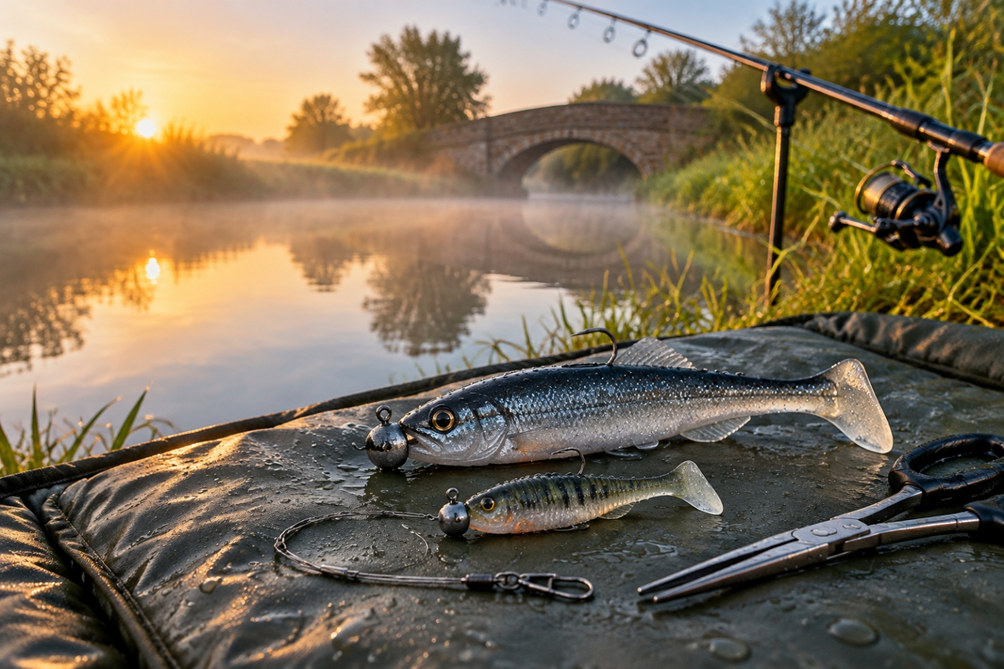
Choose pike and perch lures by four conditions: water clarity, temperature, depth and fish mood. For pike, use 10-15 cm paddle-tail shads, jerkbaits, spinnerbaits or spoons on a wire trace. For perch, use 4-9 cm ribbed soft plastics, small spinners or crankbaits. Fish slow and natural in cold, clear water. Fish faster and brighter in warm or murky water.
Standing beside a UK canal, gravel pit or river with a full tackle box is a familiar problem. You know the fish are there, but you cannot decide what to tie on. This guide gives you a simple way to choose, whether you are buying new pike lures from On Top Angling or sorting through the box you already own.
Key Takeaways
- Use the WTDM Check. Ask about Water, Temperature, Depth and Mood before every lure change.
- Match the size to the fish. Pike lures run 10-15 cm for most UK waters. Perch lures run 4-9 cm.
- Slow down in the cold. Cold water calls for a slow retrieve close to the bottom.
- Match colour to clarity. Clear water suits natural colours. Murky water suits bright, UV or larger lures.
- Protect your tackle and the fish. Always use a wire trace for pike, even when you are targeting perch.
Pike vs Perch: What Each Fish Reacts To
Pike are ambush predators. They sit in weed or beside structure, then strike at something large, flashy or vibrating. Perch are schooling hunters with smaller mouths. They hunt by sight, often in groups, and they respond to slim profiles and small, steady movements.
The two species are also closely linked. A diet study in Ukraine’s Kaniv Reservoir found that perch made up 18.4% of pike prey on a standard measure of food importance. Only Prussian carp and roach scored higher. In a Polish study of a river and a carp pond, perch made up 53.9% of the prey weight in pike from the pond.
That leads to two practical rules:
- A perch-pattern lure is a safe choice for pike. It copies a real meal.
- A school of perch can signal a pike nearby. Keep a stronger rod and a wire trace ready.
| Pike | Perch | |
| Feeding style | Ambush, fewer and bigger meals | Schooling, sight-driven, competitive |
| Main strike trigger | Size, flash, vibration | Profile, small movements, vibration |
| Lure size | 10-15 cm (18-25 cm for big fish) | 4-9 cm |
| Leader | Wire, 20 lb or stronger | Fluorocarbon, about 8 lb |
| Typical retrieve | Steady, jerked or twitched | Lift-and-drop, twitch-and-pause, steady spin |
Build your kit around conditions, not brands. If you want a starting point, browse the perch lures and larger predator lures at On Top Angling, then test each one against the WTDM Check below.
The WTDM Check: Four Questions That Pick Your Lure
Before you open the lure box, work through these four steps in order.
1. Water: How Clear Is It?
- Clear water: Use natural colours and slim profiles. Fish have time to inspect your lure.
- Stained or murky water: Use bigger lures that push water, in bright, UV or chartreuse colours.
- Do not over-think colour. A Danish experiment on perch found that prey density affected how much they ate far more than turbidity did. Finding the fish matters more than finding the perfect shade.
- Colour still counts. A US study on walleye lures found that the most successful colour changed as water clarity changed. White worked best in clear water. Also, red light fades below about 5 m, so contrast matters more than a “perfect” match.
2. Temperature: What Season Is It?
- Cold water slows a fish’s metabolism. A Turkish lake study found that pike feeding intensity was lowest in winter.
- In cold water, use a slow retrieve, a heavier lure and a bottom-hugging presentation.
- In warm water, fish chase more willingly, so you can speed up and add flash.
3. Depth: Where Are the Fish Holding?
- Weed beds: Use snag-resistant lures such as spinnerbaits.
- Drop-offs and deep holes: Use weighted shads or deep-diving plugs.
- Open water: Use spoons and crankbaits to cover ground.
- Remember: A lure running at the wrong depth will fail, however good the colour is.
4. Mood: How Are the Fish Behaving?
- Active: Fish are striking at the surface or chasing fry. Use reaction lures such as jerkbaits, spinnerbaits and fast crankbaits.
- Neutral: Fish follow or tap the lure. Use swimbaits and shads at a medium pace.
- Negative: Nothing responds. Use small profiles, finesse lures and a slow retrieve.
Your Bankside Decision Card
| If you see… | Try… |
| Clear water, bright sun | A natural-colour shad, slim profile, medium pace |
| Murky water or heavy rain | A spinnerbait or bigger shad in UV or chartreuse |
| Cold water | A soft shad, slow, near the bottom |
| Dense weed | A spinnerbait or weedless soft plastic |
| Fish following but not striking | Change speed, add a pause, then change size |
| Perch striking at fry | A small spinner or crankbait, fast and shallow |
Pike Lures: How to Choose the Right Size, Type and Colour
Short answer: The best pike lures are paddle-tail shads, jerkbaits, crankbaits, spinnerbaits and spoons. Most UK anglers use 10-15 cm, and go up to 18-25 cm for bigger fish.
Pike Lure Size
One UK angling magazine puts the average pike lure at 4-5 inches, which is about 10-13 cm. Use these rules to adjust:
- Match the local prey. If the roach and perch are small, stay at the lower end.
- Go up about a quarter in autumn or in coloured water. Pike feed heavily before winter.
- Go down on busy venues and after cold snaps. Fish become more cautious.
Pike Lure Types and When Each One Wins
- Paddle-tail shads. These are the all-rounder. Retrieve them steadily and slowly, and pause as they cross a drop-off. The common mistake is retrieving too fast in cold water.
- Jerkbaits and glidebaits. These suit active fish and reaction strikes. Twitch the rod tip, then pause, because most takes come on the pause.
- Crankbaits and diving plugs. These cover water and reach a set depth. Check the diving depth before you cast.
- Spinnerbaits and chatterbaits. These work in weedy, snaggy or murky water. Slow-roll them along the weed edge.
- Spoons. These search open water at different depths. Let the spoon flutter on the drop.
- Topwater lures. These work on calm, low-light summer days over weed or lily pads. Pause and let the ripples fade.
Matching Pike Lures to Conditions
- Cold water: Fish a soft shad slowly near the bottom. Slow, bounced presentations work because pike prefer an easy meal in winter.
- Warm or active water: Speed up, add erratic twitches and use flashy finishes.
- Murky water: Upsize and choose UV, chartreuse or glitter so the fish can track the lure.
Pike Lure Colours
- Clear water: Use natural roach or perch patterns.
- Coloured water: Use bright or UV patterns.
- Dull days: A dark lure is silhouetted against the grey sky and stands out.
- If you carry only three colours: Choose natural, black and a bright UV option.
Leaders, Line and Hooks
Pike teeth cut through mono, fluorocarbon and braid. A wire trace protects the fish as well as your lure. One UK club’s pike code requires a trace at least 18 inches long with a 20 lb minimum breaking strain, used with 15 lb mainline and semi-barbless trebles.
Pike are also delicate. Fisheries Ireland lists poor handling among the most common causes of pike deaths in angling. Have these items ready before your first cast:
- A large landing net.
- A padded unhooking mat.
- Long-nosed forceps.
- Wire cutters.
Check your local rules and close seasons before you fish.
Perch Lures: How to Choose the Right Size, Type and Colour
Short answer: The best perch lures are slim ribbed soft plastics, small spinners, small crankbaits, micro jigs and, on calm summer mornings, small topwater baits. Most are 4-9 cm.
Why Small Details Matter
Perch have smaller mouths and often hunt in groups, so profile and size matter more than they do with pike. Angler Julian Chidgey recommends crankbaits of 6-9 cm and soft lures of 4-9 cm, depending on the size of the perch. For drop-shot, he goes down to 4-6 cm.
Perch Lure Types
- Slim ribbed soft plastics. Fish them on a jig head or drop-shot rig. They move plenty of water but keep a thin, natural body.
- Spinners and spin tails. They give easy flash and vibration on a simple cast and retrieve. They are a good first perch lure.
- Small crankbaits and twitchbaits. Work them twitch, twitch, pause around structure.
- Micro jigs. These suit perch sitting tight to the bottom.
- Poppers and small walk-the-dog baits. Use them on calm summer mornings, when perch feed near the surface.
Matching Perch Lures to Conditions
- Clear water: Use natural, dull or translucent baits that copy roach or small perch.
- Low light or deep water: Use brighter or UV-enhanced colours.
- Bright sun or very cold weather: Slow down and crawl a creature bait along the bottom close to cover.
- Early and late in the day: Fish higher in the water, especially if you can see perch striking at fry.
The Cadence Test
Perch often tell you what they want through the timing of your retrieve. Follow these steps:
- Start with a pause of 5-6 seconds.
- Shorten the pause to 2-3 seconds if nothing happens.
- Switch to a steady, fast retrieve if that also fails.
- Repeat whatever draws the first follow.
Keep the colour the same while you test. Perch in a school often favour one pattern, so changing colour and speed together muddies the result.
Perch Leaders
Use fluorocarbon of about 8 lb for slow methods such as drop-shotting. It is hard to see in clear water, which helps in autumn and winter.
UK Season-by-Season Lure Calendar
| Season | Pike lures | Perch lures | Where to look |
| Spring | 12-15 cm shads or jerkbaits, medium pace | Small spinners, 5-7 cm soft plastics | Shallows, weed edges, warming margins |
| Summer | Topwater or shallow lures at dawn and dusk | Poppers, small cranks, spinners | Weed, lily pads, shaded structure |
| Autumn | 15-25 cm shads, jerkbaits, spinnerbaits, faster pace | 6-9 cm crankbaits, jig-head shads | Weed lines, drop-offs, baitfish shoals |
| Winter | 15-20 cm soft shads, slow and near the bottom | 4-6 cm drop-shot, slow and tight to cover | Deep holes, slack water, canal bends |
Summer warning: In hot weather, pike struggle to recover after capture because oxygen levels are low. Fish deeper, cooler water, or target perch instead.
The Pike-and-Perch Combo Approach
You can use one species to find the other. Follow this plan:
- Locate the perch school with a small lure.
- Rig a second rod with a larger lure on a wire trace.
- Cast it near the shoal. Pike often hold close to dense groups of prey.
- Handle every fish with care. Wet your hands and keep the fish low over the mat.
One firm rule applies. Use pike-ready tackle even when you expect perch. A light fluorocarbon leader will not survive a surprise pike, and the fish may swim off with your lure still in its mouth.
Where You Fish: Canals, Rivers, Gravel Pits and Reservoirs
- Canals: These are shallow and often clear. Use smaller, natural-coloured lures slowly, and cast close to bridges, moored boats and far-bank cover.
- Rivers: Current drags light lures out of position. Use heavier jig heads, and target slack water, eddies and weir pools.
- Gravel pits: These are often deep and clear. Use natural colours and work the drop-offs.
- Reservoirs and large lakes: Use spoons and crankbaits to search open water, then work weed edges with shads.
As a rough depth guide:
- Under 2 m: Light, shallow-running lures.
- 2-5 m: Mid-weight shads and crankbaits.
- Over 5 m: Heavier jig heads or deep-diving plugs.
A fishfinder takes the guesswork out of depth and baitfish. On Top Angling also runs guided kayak fishing trips if you would like expert help on the water.
Build a Minimal Lure Kit
You do not need fifty lures. Six per species cover most days.
Starter pike kit
- ☐ Two paddle-tail shads, one natural and one bright.
- ☐ One jerkbait.
- ☐ One spinnerbait.
- ☐ One spoon.
- ☐ One crankbait.
- ☐ Wire traces, forceps and wire cutters.
Starter perch kit
- ☐ Two ribbed shads, 4-7 cm.
- ☐ Two spinners.
- ☐ One small crankbait.
- ☐ One micro jig or drop-shot rig.
- ☐ Fluorocarbon leader material.
- ☐ A few spare hooks.
Once you are comfortable, add a topwater lure for summer and a larger glidebait or big shad for autumn pike.
Where On Top Angling Fits In
If you want to build these kits from one UK shop, On Top Angling stocks the main items covered in this guide:
- Lures and baits, including freshwater and saltwater lures and the Westin deadbait range.
- Braid, fluorocarbon and line for leaders and mainline.
- Terminal tackle, such as hooks, crimps, sleeves, swivels and lure clips for wire traces.
- Tools, measuring and weighing gear for safe handling.
- Fishfinders, kayaks and guided kayak fishing trips for finding fish on bigger water.
At the time of writing, the shop offers free shipping on orders over £50. Check the site for current stock and prices.
8 Common Lure-Selection Mistakes (and Quick Fixes)
- Using oversized lures for perch. Drop to 4-7 cm.
- Fishing too fast in winter. Slow down and stay near the bottom.
- Skipping the wire trace for pike. Always use one.
- Changing lures instead of the retrieve. Vary speed and pauses first.
- Ignoring water clarity. Match colour and size to what the fish can see.
- Fishing at the wrong depth. Check the lure’s diving depth or weight.
- Staying too long in one spot. If nothing follows after 10-15 casts, move.
- Ignoring follows and short strikes. They are information, so change one small thing.
The Fish Followed but Did Not Strike
A follow means the fish is interested but not convinced. Work through these changes one at a time:
- Change speed. Slow down or speed up.
- Add a twitch or a pause. A sudden change often triggers the strike.
- Change size or profile. Go smaller, or switch to a different shape.
For pike near the bank, do not lift the lure out as soon as you see the fish. Let it sink to the bottom, because the fish will often follow it down. A figure-of-eight with the rod tip keeps the lure moving and gives the fish a second look.
Frequently Asked Questions
What is the best lure for pike?
A 10-15 cm paddle-tail shad. It works in clear or coloured water and in every season.
What is the best lure for perch?
A slim 5-7 cm ribbed soft plastic on a jig head or drop-shot rig. Small spinners are the easiest option for beginners.
What is the best lure for pike and perch?
A small paddle-tail shad of about 10 cm on a wire trace. It suits large perch and is big enough for pike.
Can you catch pike and perch on the same lure?
Yes. Perch are a regular prey of pike, so a perch-pattern lure can catch both. Always use a wire trace.
What size lure is best for pike?
Most anglers use 10-15 cm. Go to 18-25 cm for bigger fish, especially in autumn.
What size lure is best for perch?
Use 4-9 cm, depending on the size of the perch. Drop-shot lures sit at the small end, around 4-6 cm.
What colour lure is best for pike?
Use natural roach or perch patterns in clear water. Use bright, UV or chartreuse in coloured water.
What colour lures do perch like best?
Natural baitfish shades work in clear water. Brighter or UV colours work in low light or deep water.
Do pike and perch like the same lures?
Partly. Both take shads, spinners and crankbaits. Pike prefer larger, louder lures. Perch prefer smaller, slimmer ones.
Do you need a wire trace for pike?
Yes. Pike teeth cut through mono, fluorocarbon and braid. Use at least 18 inches of 20 lb wire.
What line is best for perch fishing with lures?
Use light braid or mono on the reel, with an 8 lb fluorocarbon leader.
What is the best time of year to catch pike on lures?
Autumn is widely seen as the peak for big pike. Winter also works with slow, deep presentations.
How do you catch pike in winter?
Use a soft shad of 15-20 cm. Fish it slowly near the bottom around deep holes or slack water.
What depth do pike and perch hold at?
Both sit near weed, drop-offs and cover. In winter they move deeper. In summer they move into shallow weed at dawn and dusk.
Why do pike follow a lure but not bite?
The fish is curious but not triggered. Change speed, add a pause or twitch, then change size.
Do pike eat perch?
Yes. Perch are a regular part of the pike diet in many waters, as the diet studies above show.
Conclusion
The best lure is not a product. It is a decision. Run the WTDM Check (water, temperature, depth and mood) and let the conditions choose for you. Start with a small kit, and change your retrieve and size before you swap lures. Handle every pike with care, and use a wire trace without exception.
Ready to build your kit? Visit On Top Angling for lures, line, terminal tackle and fishfinders, all from one UK shop.


Leave a reply