
Sauna Buying Guide: How to Choose the Right Sauna for Your Home
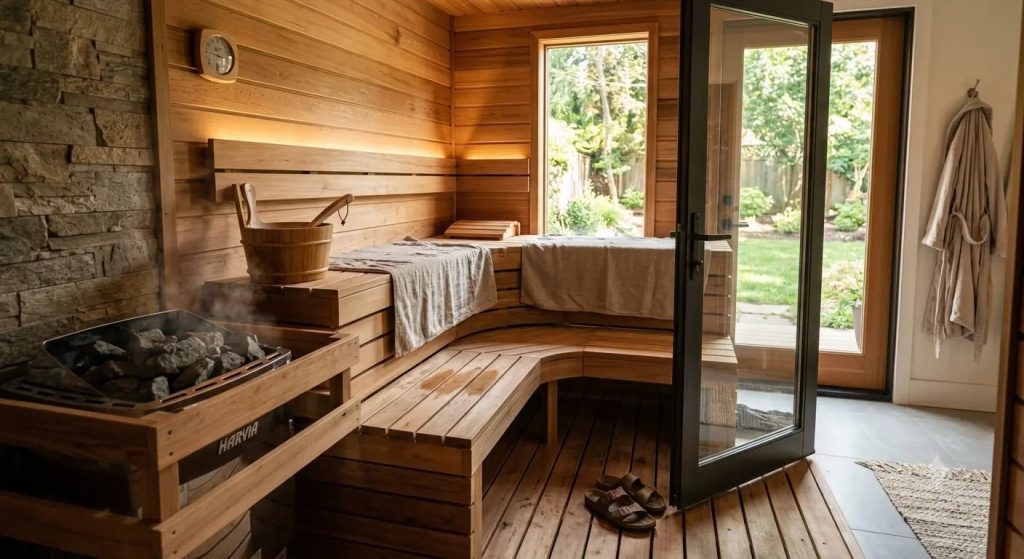
Most first-time buyers spend weeks comparing cabins and almost no time on the two things that decide whether the purchase works: the electrical panel and the space it has to fit into. This guide covers what actually matters before you buy a sauna.
Why Choosing the Right Sauna Matters
A sauna is a fixed appliance, not a piece of furniture. Once it is wired in and assembled, changing your mind is expensive.
The other reason to slow down is the budget. The sticker price is rarely the final price. Electrical work, permits, site preparation, and moving a heavy crate from your driveway routinely add a significant amount on top of the unit itself. Plan your total number, not the advertised one.
Understand Different Types of Saunas Before You Buy
Traditional saunas heat the air and a bed of stones, typically running between roughly 150°F and 195°F. They need around 30 to 40 minutes to preheat, and you can pour water on the stones to control humidity. Best for people who want the classic high-heat, steam-capable experience and have the electrical capacity for it.
Infrared saunas use panels to warm your body directly at lower air temperatures, usually around 120°F to 150°F. Sessions are gentler and longer. They are designed for indoor use and are by far the simplest to install. Best for first-time buyers, apartments, and spare rooms.
Indoor saunas win on convenience — a sauna you walk past every day is a sauna you actually use. They need proper ventilation and moisture-tolerant flooring.
Outdoor saunas give you the full ritual, including cooling off outside. They also need a level foundation, weatherproof wiring, and often a zoning or building permit.
Important Things to Check Before You Buy a Sauna
Available space. Measure the footprint plus door swing, heater clearance, and ceiling height. A one-to-two-person infrared cabin fits in roughly a 4×4-foot area. Then measure the path from your door to the room.
Number of users. Buy for realistic use, not aspirational use. Large saunas are usually occupied by one or two people. A smaller cabin with a longer bench often serves better.
Heating system. A common sizing rule is about 1 kW of heater power per 50 cubic feet of room, with roughly another kilowatt added if you have a glass door. Ask the seller for the heater’s nameplate specifications in writing.
Wood quality. Cedar, hemlock, and thermally treated spruce or aspen all handle heat and humidity well. What matters more is thickness, joinery, and whether the interior uses glues or finishes that can off-gas when hot. A cheap heater and thin single-layer walls will show up as cold spots and slow heat-up within a year.
Electrical requirements. This is where projects stall. Small infrared cabins often run on a dedicated 120V, 15–20 amp circuit. Traditional electric heaters at 3 kW and above generally need a hardwired 240V dedicated circuit — a 6 kW heater typically calls for a 40-amp breaker, a 9 kW heater around 50 amps. Electrical code treats a sauna heater as a continuous load, so the circuit is sized above the heater’s rated draw. Before you order anything, have a licensed electrician run a load calculation on your panel. Older homes near capacity may need a panel upgrade first.
Installation needs. Saunas ship by freight, usually to the curb. Crates can weigh several hundred pounds. Getting it from the driveway to the backyard is your problem unless you pay for white-glove delivery.
Common Mistakes Buyers Make
- Choosing on price alone. Value is better measured in years of use than in dollars saved at checkout.
- Ignoring size. Both directions. Too big wastes energy; too small and nobody stretches out.
- Paying for features that don’t matter. Insulation, heater quality, and ventilation change every session. Built-in Bluetooth speakers and colour-changing lights do not.
- Not checking installation requirements first. A 240V circuit you cannot support turns a delivered sauna into a very expensive shed.
- Overlooking warranty and support. Many warranties split coverage — several years on the structure, far fewer on the electrical components. Read that split before you pay.
- Forgetting maintenance. Benches need wiping down, heater stones need replacing every few years, barrel bands need re-tensioning, and outdoor cedar needs periodic treatment.
Where to Buy and What to Look For
When people ask where to buy sauna models for the home, there are really three routes: specialty dealers, large retailers and warehouse clubs, and direct-to-consumer brands. Specialty dealers cost more and usually include a site assessment and real after-sales support. Big-box pricing looks better until the freight truck leaves your crate at the curb.
Whichever route you choose, check the same four things: independent reviews that discuss ownership rather than unboxing, the warranty split between structure and electrical parts, whether replacement parts are stocked domestically, and who you call when a control panel fails in year three. Comparison resources that test units over time — rather than reprinting spec sheets — are worth reading before you buy a sauna you will keep for a decade.

About author


Leave a reply