
Why Event Venues Are Rethinking the Economics of Banqueting Seating
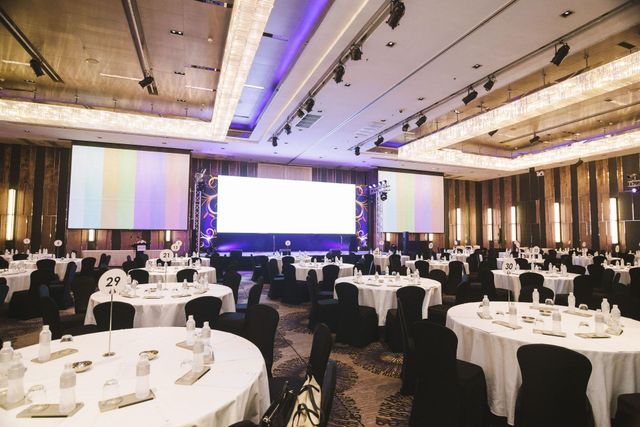
There is a calculation most venue managers make every few years, and it almost always comes down to the same trade-off. Replace what is showing its age, or stretch it for another season. The figures look simple on the surface. A cheaper chair costs less today. A premium one costs more. The maths writes itself.
Except it does not, and operators who have been in the industry long enough know it.
Anyone who has ordered seating in volume understands that the headline price tells only a fraction of the story. The real cost of a chair is the total it consumes across its lifespan: the original purchase, the storage, the cleaning, the breakages, the upholstery touch-ups, the replacements when frames give way after eighteen months of being stacked twelve high. Cheap seating rarely turns out to be cheap. It just defers the cost until a quieter trading period when the invoice lands.
In recent years, larger venues have started running these numbers properly. The shift has been telling.
The Maths Behind a Long-Service Chair
A well-built banqueting chair, properly specified, will absorb a level of punishment that most people outside the industry would find astonishing. Two thousand guests a year. Stacking, transporting, dragging across timber floors. Lap spills, dropped cutlery, the occasional best-man performance that ends with a chair sideways on the carpet.
A reputable manufacturer designs for that life. The frame is engineered to withstand contract-grade loading. The fabric is flame-retardant and certified for commercial use. The foam recovers its shape rather than flattening within a season. The replacement parts are still available a decade later, because the chair is part of a product line rather than a one-off import.
Compare that with the budget alternative. The first season looks identical. By the second, the upholstery is showing pulls and the seat pad has lost its bounce. By the third, the venue is ordering a third of the stock again, and the original “saving” has quietly evaporated.
Why Aesthetics Are Catching Up With Engineering
Until fairly recently, the assumption was that commercial chairs and beautiful chairs were two different products. Choose one and accept that you could not have the other. Stackable workhorses sat in stores. Designer pieces lived in the suite for a Saturday night and were never deployed beyond it.
That gap has closed. The latest generation of contract-grade banquet seats on the UK market sit comfortably in five-star ballrooms and corporate gala dinners without any apologetic styling. The frames have slimmed down. The finishes range from polished beech through to brushed steel. The fabric options are wide enough that a venue can specify something that complements the rest of the room rather than fights it.
For venues that hold weddings, this matters more than the spec sheet suggests. Couples photograph the room. The chairs end up in every shot. A tired chair will be visible in the album for decades.
The Operational Question Most Venues Forget
The other piece that often goes unconsidered is logistics. A venue holding three hundred guests at a sit-down dinner needs to be able to set up the room in an hour and reset it twice the following day. That is only possible with seating that stacks tightly, moves on trolleys without snagging, and reassembles without a missing screw at the back of the box.
Storage cost in central London is not trivial. A chair that stacks fifteen high uses a third of the footprint of one that stacks five. Over a year, that difference shows up in the rent bill.
These are not glamorous considerations. They are the ones that decide whether a venue runs profitably.
What Smart Operators Now Specify
The pattern among well-run venues looks broadly the same. Specify a contract-grade frame from a manufacturer with a track record. Choose a fabric that suits the room rather than the cheapest option in the catalogue. Buy fifteen or twenty per cent more than the seating plan requires, so rotation extends the life of the whole stock. Replace upholstery once, not the chair.
It is not a complicated playbook. It is just one that takes the long view.
In a market where margins are tight and reputation moves fast, that view tends to pay back faster than anyone expects.

About author


Leave a reply